

Losing a tooth can feel isolating, but it happens to far more people than most realize. Research shows that 178 million Americans are missing at least one tooth. Another 35 million are fully edentulous, which means they have no natural teeth left at all.
Teeth can be lost to gum disease, decay, or an accident. Whatever the cause, and whether you are missing one tooth or several, North Brunswick Family Dental & Orthodontics is here to help. Our team uses state-of-the-art care and current treatment options to help patients rebuild smiles that are complete, healthy, and attractive.

Dental implants are today's most advanced way to replace missing teeth. Traditional fixed bridges and dentures still work well for many people. Even so, implants come closest to matching the appearance, comfort, and everyday function of real teeth.
Implants act much like natural tooth roots. That gives them exceptional stability as a foundation for many kinds of replacement teeth, from crowns and bridges all the way to a full set of teeth. With that support in place, you can return to the foods you love and talk and smile without second-guessing yourself.
Implants can also help people who wear full dentures. By anchoring the denture, implants add the stability and hold needed for a more comfortable fit, and they help stop the slipping that can make social moments awkward.
If tooth loss is affecting your daily life and you want to explore your replacement options, we invite you to visit North Brunswick Family Dental & Orthodontics. We are glad to talk with you about dental implants and the full range of state-of-the-art services we offer. At North Brunswick Family Dental & Orthodontics, helping our neighbors in North Brunswick enjoy healthy, beautiful smiles is work we are truly proud of.
A dental implant is a small surgical post made from a biocompatible material, which means the body accepts it well. It is placed in the jawbone, where it works much like the root of a natural tooth.
After the implant bonds with the surrounding bone, it becomes a firm anchor for a single crown, a bridge, or a denture. As the most advanced tooth replacement method available, implants offer a durable, functional, and satisfying way to restore a full smile.
It can help to think of an implant restoration in layers. The post sits below the gumline in place of the missing root. The visible part, whether a crown, a bridge, or a denture, is attached on top and designed to blend in with the rest of your smile. Because the foundation is anchored in bone rather than resting on the gums or leaning on nearby teeth, the finished result feels steady and secure.
Dental implants can rebuild your smile whether you are missing a single tooth, a few teeth, or every tooth. Around 3 million people already have implants, and that number climbs by roughly 500,000 each year. Much of that rapid growth comes from the many advantages implants offer compared with other treatments.
Fixed bridges and dentures remain dependable choices. Still, implants bring several benefits that traditional options cannot match:

One of the biggest strengths of implant dentistry is its flexibility. Implants can be used in several ways depending on how many teeth you need to replace and what feels right for your lifestyle. Common types of dental implant treatment include:
Not sure which of these fits your situation? That is completely normal. Many patients come in with questions about the differences between a bridge, a denture, and an implant-based option. We will lay out the choices side by side, explain how each one works, and help you weigh them against your goals so you can make a decision you feel good about.
Finding out whether you are a good candidate for implants is simple. At North Brunswick Family Dental & Orthodontics, we are happy to examine your smile, answer your questions, and walk you through the implant options that fit you best.
No two smiles are the same, so we never take a one-size-fits-all approach. Your personalized treatment plan is built around your medical and dental history, the current health of your mouth, your cosmetic goals, your lifestyle, and your budget. If other care is needed first, such as periodontal treatment or extractions, we will explain how it fits into your plan.
To get the most from your visit, it helps to bring a list of any medications you take and any questions you have been wondering about. If this is your first time seeing us, our new patients page explains what to expect.
Successful implant treatment depends on careful planning and precise work at every stage. That includes the initial treatment plan, accurate placement of the implants, and the design, fabrication, and fitting of your final crowns, bridges, or dentures.
Implant placement is usually considered minor oral surgery and is done on an outpatient basis, so you go home the same day. How involved the procedure is will depend on the type and number of implants you need and whether the supporting bone needs any preparation first.
Clear communication is a core part of how we care for patients. Before your procedure, we will talk with you about dental anesthesia and your sedation dentistry options, including whether IV sedation may be a fit. You will also receive detailed instructions for before and after your visit, and our team will keep you informed throughout your treatment.
After placement, an implant needs a few months to fully bond with the surrounding bone. This process is called osseointegration. Some implant solutions allow a temporary crown or bridge to be placed the same day. Others require complete healing and osseointegration before the permanent replacement teeth are attached. We will let you know which approach applies to you.
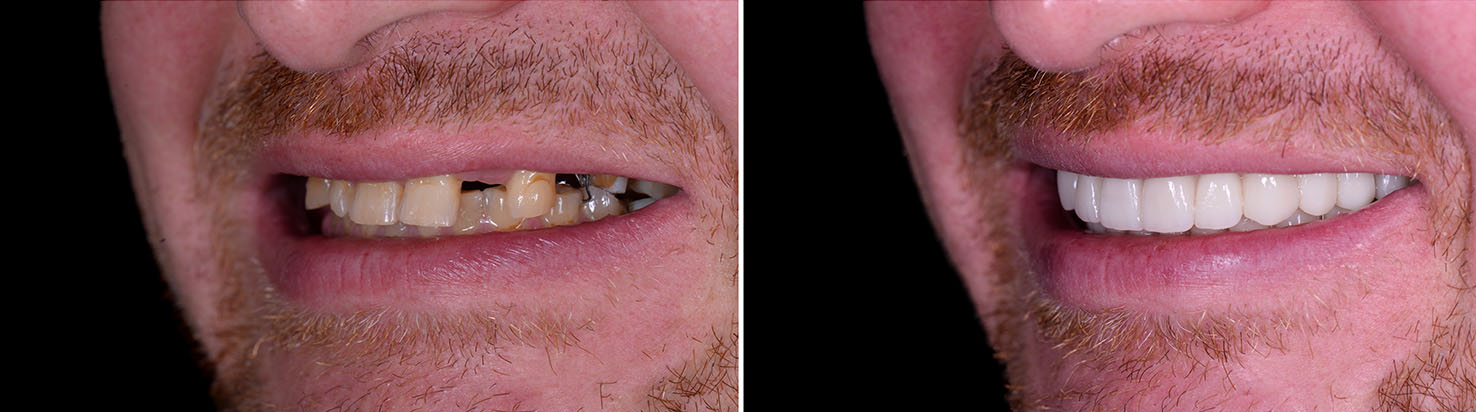
Clinical research shows dental implants have a long-term success rate of well over 95%. That success, however, relies on having enough healthy bone to hold the implant when it is placed.
Bone volume often decreases after a tooth is removed or when periodontal disease is present. A bone graft can rebuild that support. It may be placed in the extraction site right after a tooth comes out, or before implant placement, to create a solid foundation for a strong, stable implant.
If a graft is recommended for you, we will explain why, where it would be placed, and how it affects the timing of your treatment, so there are no surprises along the way.
An implant cannot get a cavity, but the gums and bone around it still need attention. Healthy tissue is what keeps an implant firmly in place, so good habits matter just as much as they do for natural teeth.
Routine visits through our preventive program are a simple way to help protect your investment and the rest of your smile.
Missing teeth affect more than appearance. Gaps can make it harder to speak clearly or chew healthy foods comfortably. Over time, the teeth beside an empty space may drift into it, which can change your bite and create other problems for your oral health.
Thanks to today's advances in dental materials, technology, and techniques, replacing missing teeth with natural-looking, attractive results is more achievable than ever.
At North Brunswick Family Dental & Orthodontics, we are pleased to provide leading solutions that support your oral health and give you a smile you will be proud to share. Our goal is to restore the complete smile you have lost and to offer personalized care for all of your dental needs.
Ready to learn more about dental implants in North Brunswick? Call us today at (732) 249-4800 or request an appointment so we can take a closer look at your smile.
A dental implant is a small surgical post made from a biocompatible material, meaning the body accepts it well. It is placed in the jawbone, where it works much like the root of a natural tooth.
Once it bonds with the bone, it can anchor a single crown, a bridge, or a denture.
The only way to know is an exam. Our team looks at your medical and dental history, the current health of your mouth, your goals, your lifestyle, and your budget before recommending a plan.
If other care comes first, such as periodontal treatment or extractions, we will explain how it fits into your treatment.
Implant placement is usually considered minor oral surgery and is done on an outpatient basis. Before your procedure, we will talk with you about dental anesthesia and sedation options, including whether IV sedation may be a fit.
You will also get detailed instructions for before and after your visit, so you know how to care for yourself while you heal.
It depends on the type and number of implants and whether your bone needs preparation first. After placement, an implant needs a few months to bond with the bone, a process called osseointegration.
Some solutions allow a temporary crown or bridge the same day, while others need full healing before permanent teeth are attached. We will tell you which applies to you.
Not everyone does. Implants need enough healthy bone to hold them, and bone volume often decreases after a tooth is removed or when periodontal disease is present.
If a graft is recommended, we will explain why, where it would go, and how it affects your timeline.
Bridges and dentures still work well for many people. Implants come closest to the look, feel, and function of natural teeth, though.
Yes. An implant-retained denture connects to a select number of implants placed in the upper or lower jaw. These posts give the denture secure attachment points, adding stability and hold.
That can reduce slipping and make it easier to smile, speak, and eat comfortably.
Yes, there is an option for that. Full arch replacement uses four or six implants placed in strategic spots to support a complete arch of replacement teeth that stays fixed in place.
Temporary teeth can sometimes be placed right away, with permanent teeth added after the implants bond with the bone.
No, the implant itself cannot decay. The gums and bone around it still need care, though, because healthy tissue keeps the implant firmly in place.
Brush gently twice a day, clean between your teeth and around the implants daily, and keep up with regular checkups and cleanings.
With careful placement, good daily hygiene, and regular dental visits, implants can serve you for many years. Clinical research shows a long-term success rate of well over 95%.
Success depends on healthy bone and gums, so following your post-op instructions and attending checkups matters.